|  |
 |
 |
 |
 |
 |
 |
 |
 |
 |
 |
 |
 |
 |
 |
 |
 |
 |
 |
 |
 |
| 2005 |
| January 12-March 9 UCLA - Graduate 434 (enrolled students only) |
| January 15 San Diego Learning Annex 1 -4 PM workshop San Diego, California |
| January 22 Los Angeles Learning Annex 1 - 4 PM workshop Los Angeles, California |
| January 29 San Francisco Learning Annex 1 - 4 PM workshop San Francisco, California |
| January 31 Sacramento Learning Exchange 6:30 pm Sacramento, California |
 |
| June 18-July 1 Superior Screenwriting Colony Superior, Nebraska |
| 16-29 July UK/Euro Screenwriting Colony Cambridge, England |
|
| September 17-30 |
| Travel arrangements for Lew and Pamela Hunter are made by Rhonda Edwards Superior Tour & Travel 800-279-1026 Find every flight, every cruise, every hotel, with a travel professional. Personal service at internet prices. |
| Pamela and Lew Hunter are available for celebrations and personal appearances. Please contact Lew for further information. |
| If you reached this page using a search engine, please click here to see the home page. |
| Title and name links courtesy IMDb.com. |
| Link to us! |
| Contact the webmaster. |
| Updated |
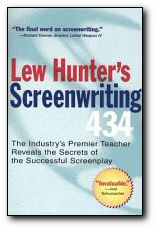
| ©2005/ Lew Hunter, author of “Screenwriting 434.” All other material belongs to the bylined writer. |
 |
 | |||||||||||||||||||||||
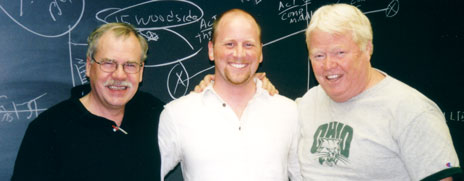
 “Writing is like playing a piano. A piano has eight octaves and to play it fully a skilled pianist utilizes all of them. Most writers only use the center two octaves when they write, but a good writer will play the whole piano.’ And so it began, the seventh, eighth, or ninth (depending on who you talk to) annual screenwriting workshop. This was my third and final workshop as a student at Ohio University. Many of the other students had never experienced the charm and general human kindness that emanated from Dr. Lewis Hunter and were anxious. Their fears were quickly laid to rest when in he walked, cherubic features topped by pale blond hair, Ohio University T-shirt, sandals, shorts, and a smile plastered across his face. He greeted those of us that he knew from previous years with hugs all around. His partner in crime at the workshop, Dr. David Thomas, was much the opposite in appearance. His distinguished graying hair, cell phone with Palm Pilot attached to his hip, and a notebook living in his shirt pocket identified him as the screenwriting professor we knew and loved. And, after brief introductions we got down to business. Lew passed around a bag that was full of an eclectic mix of small figures. We placed them around the table as our inspiration. He called them his storytellers. They were an international collage of famous people, unknowns, and some things in-between. Then it happened. Lew slipped his feet out of his sandals, dug his bare toes into the carpet, and began. The workshop was to run from Sunday to Saturday. Each morning, Lew would push us a little further along in the generation of our stories and every afternoon David would work with us in small group sessions to give us more personal attention. We were expected to go from concept to the first actual pages of the screenplay by the end of the week. So, “Bring in 3 ideas that you know about, 3 ideas that you care about.” said Lew.“If you know about them, you will convey things that we, as the audience, don’t know and bring us into your special world, informing us and moving us with passion and caring.” That was our assignment; bring in three ideas “Ripped from the steaming asphalt of your soul.” MONDAY:
After all the ideas were distributed Lew read each of them aloud. When he was finished with each idea, we voted on whether we would see that movie or not. Through this judgment, we got a feel of what was commercially viable or what was simply a good idea. Lew and David would make suggestions here and there or try to delve deeper into the ideas, to see what it was really about. Everyone came out of that process with at least one viable premise for a film, on which they would work for the next few days. And, we were given our next assignment. Write a two-page synopsis of the idea that we were going to work on. TUESDAY: We passed out our two page ideas and Lew read them aloud. He offered brief feedback on logic points and story elements as we progressed and then he summarized. “First of all, conflict, conflict, conflict. Movies are about conflict. Every scene is a conflict. Nobody should agree. That doesn’t mean everybody fights all the time, they just don’t want the same things.” he explained. “Oh, and all of these bar and restaurant scenes have got to go. Put them someplace interesting.” Movies are visual. Watching people eat or drink is boring. Let the film take the viewer someplace interesting, someplace they’ve never been, even in the most minor of scenes. “Now,” said Lew, “in your groups this afternoon re-work some ideas with David. Tomorrow we’ll talk about characters.” WEDNESDAY: “Characters propel the story. When we leave a movie theater, we remember the characters the most.” Lew read some character sketches that he thought were particularly well done. These sketches had one thing in common; they were all told from the first person perspective. Every character spoke to us. We got their attitude, dialect, and psychology from a one page monologue. We didn’t go into their birth, marriage, divorce, or the puppy they had when they were six. The only things we discovered about the characters were how they felt and what was important to them. If their puppy was important then they talked about it and we knew why it was important to them. This led to our assignment for the next day. Get into our characters heads and let them speak. We were to act as a channel or medium, letting our characters tell us who they were. THURSDAY: “Now you’re ready to move on to your step outlines.” spoke our jolly sage. These outlines were to consist of a one or two sentence description of each scene in the screenplay. Each step should represent at least a page and no more than five of actual script. The outlines should contain between thirty and forty-five. Comedies and action pictures would have the most steps as they are the fastest paced stories. Our ultimate goal was to target between one hundred and one hundred ten pages. “Anything less doesn’t seem like a real movie and anything more is too long; no one will want to read it.” Throughout his career Lew has read over three thousand screenplays, after a while he started to notice structural patterns. Act One, in a ninety page screenplay, usually ended between pages seventeen and twenty-two. At this point the dramatic question was posed, the hero accepted the call to adventure, whatever you wanted to call it, and it started the story. Act Two began. Here David broke in with his version of Act Two, as Lew heartily agreed, which consisted of three parts: Act Two A, mid-point, and Act Two B. Act Two A is where the hero reacts to the world or things happen to them. They discover the special world, their allies and enemies, etc. Everything changes at the mid-point, a dramatic event that shifts the course of the story, about page fifty-five to fifty-seven. Following the mid-point begins Act Two B. The hero takes action, propels the story, and makes his/her own fate. This continues until the crisis, or as David put it, “The oh-shit now what?” Here Lew picked up again. It was like watching a tag team wrestling match the way they worked together. The crisis could fall in a broader range of page count depending on the type of story, typically though, it fell around page eighty. The crisis naturally leads to the climax and resolution. Simple, right? We were to consider this structure when constructing our stories, or step outlines. And, we went home to begin throwing obstacles in our hero’s paths. FRIDAY: There’s something to be said about a workshop environment. When you have over a dozen writers in one room helping each other craft great stories you usually end up with great stories. The hard parts lay in finishing the screenplays or sometimes even starting of the actual writing. And that was our final assignment. Write the first ten pages of the screenplay. SATURDAY: And, as we read through everyone’s pages it seemed to be true. Everyone could write. Each person had a distinctly different style as well, their voice. Whether they intended to or not, each person had crafted a story unlike anyone before them, beside them, or after them. “This is why when people say it’s been done, you know they don’T get it. Everything’s been done. But, not by you. No one will tell the story the way you will, from your perspective, with your characters. So, every story is new, even if it’s been done before.” THE BIZ: Taking meetings. Remember, this is a business. Those executives are in their positions for a reason. They’re smart. If they give you notes, consider them. They’ve seen hundreds of stories, they can help, not always, but they are usually very good at identifying problems. They want your story to be the one, the next big hit. Convince them that it is. Don’t, however, be afraid to say thank you and walk away if you’re not willing to compromise. Any questions? And with that, our journey together ended. Lew offered his contact information for everyone. And, as we all said farewell, we knew that there was much more to be learned from this man than we could get in one week. There is a reason he is one of the most renowned screenwriting instructors in the world. After a round of hugs, we watched as he wandered off down the hall, and we knew he would be back again, next year. I watched with a special fondness because I knew that the next time I saw Lew, I would be a working screenwriter and no longer a student. | |||||||||||||||||||||||
 | |||||||||||||||||||||||
 | |||||||||||||||||||||||